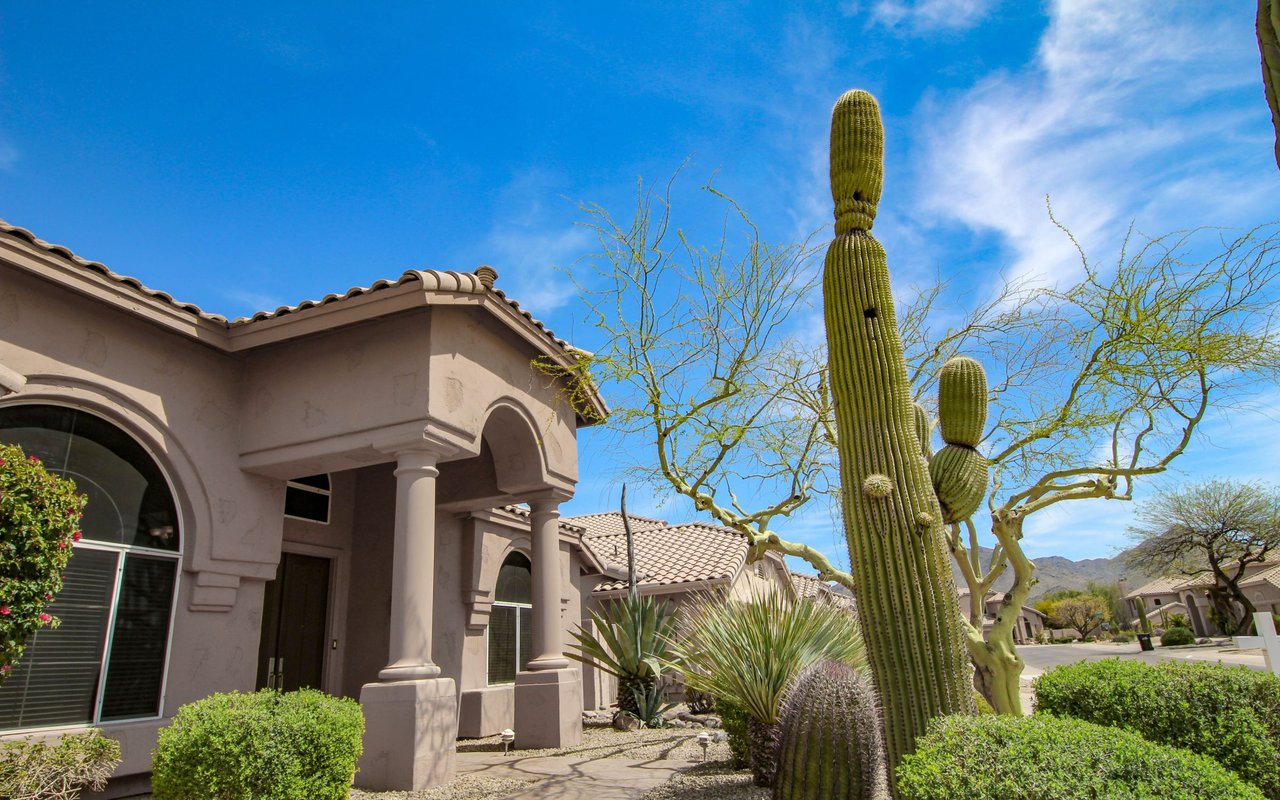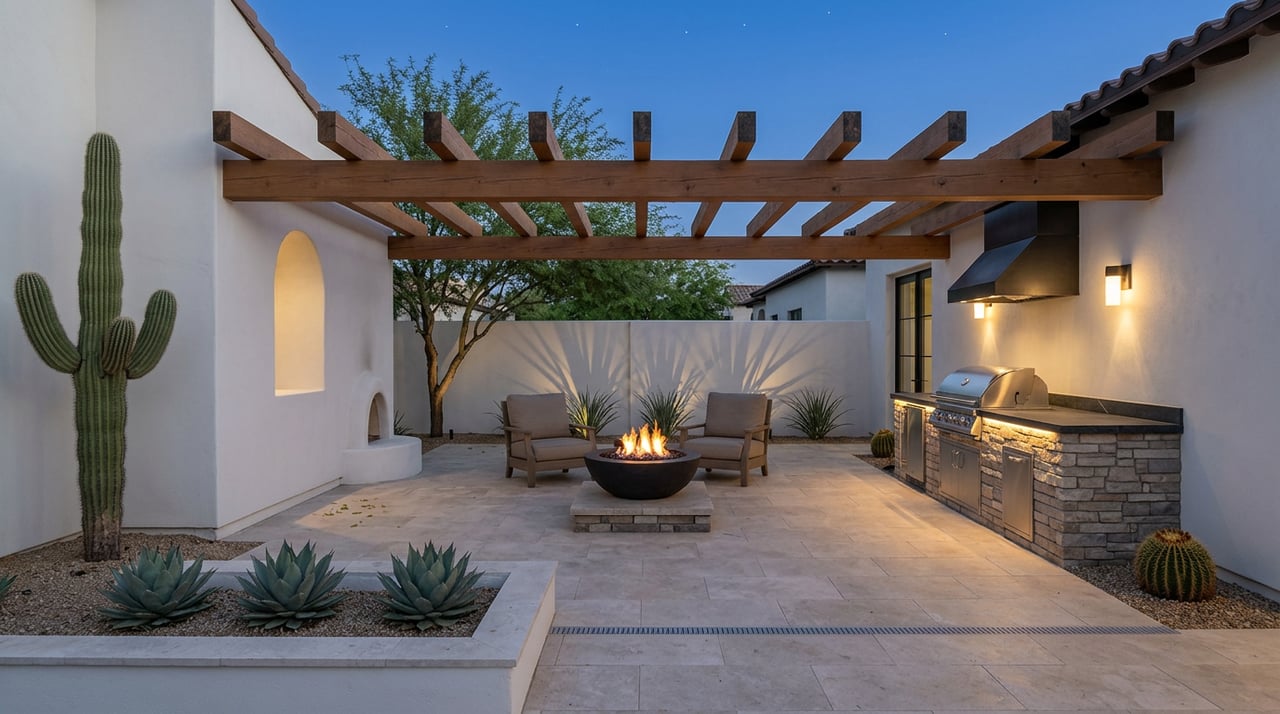
Craving more time outside but worried the Carefree sun will chase you back indoors? You’re not alone. You want a backyard that stays comfortable, uses little water, and looks great at night without losing the stars. In this guide, you’ll get practical, locally smart ideas to design, build, and maintain a desert‑ready outdoor space with an eye toward comfort, safety, and resale. Let’s dive in.
Plan for Carefree climate
Carefree sits around 2,200 to 2,600 feet in the Sonoran Desert foothills. Local climate summaries show an average annual high near 82.3°F, an average annual low near 56.8°F, and roughly 12.7 inches of rain a year, much of it during the summer monsoon. These numbers drive your shade, planting, and irrigation choices.
Expect microclimates across town. Higher lots can be a touch cooler, and wind exposure can vary by slope and orientation. Broadly, yards here often fall near USDA zones 9b to 10a. Use that as a general guide, then lean on regional low‑water plant lists and your specific site conditions for final choices.
Build smart shade
Your biggest comfort boost is shade, especially on south and west exposures. Deep patio overhangs, pergolas or ramadas, and strategically placed shade trees block high summer sun while still letting in winter light. Thoughtful shade cuts radiant heat on walls, hardscape, and seating so you feel cooler with less powered cooling. For more on why orientation and seasonal angles matter, see the passive shading guidance from Building America Solutions Center.
Layer comfort features. Ceiling or pedestal fans move air and increase evaporative cooling on skin. Use misters or small evaporative units only in targeted zones and only when water use makes sense, guided by the conservation best practices from the Arizona Department of Water Resources. Prioritize shade first, then add light, efficient cooling.
Choose cooler hardscapes
Paving color and material choice can make or break afternoon comfort. Lighter, more reflective surfaces tend to stay cooler underfoot than dark, dense slabs. For a refined look that performs, consider light‑colored permeable pavers for dining areas and decomposed granite for paths.
Think like a desert. Monsoon bursts can overwhelm solid surfaces. Combine permeable paving, modest swales, and small infiltration basins to slow and sink stormwater on site. Maricopa County encourages these low‑impact approaches; review the county’s water conservation site for context before you design.
Plant low‑water layers
Start with regionally vetted plants. The AMWUA plant list and ADWR’s landscaping guidance are your go‑to resources for Carefree’s upland desert climate.
- Shade trees for summer relief: Desert Museum palo verde, foothill palo verde, velvet mesquite, desert willow, and ironwood. Place them to block late‑day sun on patios and windows.
- Shrubs and color accents: Texas sage, brittlebush, Mexican bird of paradise, and damianita offer seasonal color with modest water needs.
- Sculptural accents: Agave, yucca, barrel cactus, prickly pear, and ocotillo provide year‑round structure.
- Grasses for texture: Deer grass and other regional natives add movement without adding heavy water demand.
For irrigation, favor drip lines, micro‑spray, or bubblers for trees and plant zones. Pair your controller with a weather or soil sensor and water in the pre‑dawn hours to reduce evaporation. Group plants by water need so you can dial in run times without waste.
Design for wildfire safety
Carefree promotes Firewise practices that reduce home ignition risk. Think in zones and keep fuels lean close to your house.
- Immediate zone (0 to 5 feet): Use non‑combustible surfaces like pavers or gravel, and keep plants small and well spaced.
- Intermediate zone (5 to 30 feet): Thin and prune, remove dead material, and separate shrubs and tree canopies.
- Extended zone (30 to 100+ feet): Continue thinning and spacing based on slope and the natural desert beyond your lot.
Review local guidance on defensible space and neighborhood programs on the Town’s wildfire prevention page. Be vigilant about invasive grasses. Buffelgrass and similar species escalate fire intensity; learn how to spot and remove them with this overview from the National Park Service.
Light for stargazing
Carefree’s night sky is part of the magic. Use warm (3000 K or lower), full‑cutoff fixtures for patios and paths to reduce glare and light spill. Add motion sensors and timers to limit run times and preserve sky darkness.
For a quick primer on best practices, see this night‑sky‑friendly guidance from the International Dark‑Sky community. A little restraint goes a long way: layer task lighting where you need it, keep accent lighting subtle, and avoid uplights.
Outdoor features buyers love
If you might sell in the next few years, invest in features that feel great to use and are straightforward to maintain.
- Shaded patio or ramada: A covered outdoor room extends living space and boosts day‑to‑night usability. Many structural covers need permits; the Town outlines requirements on its Building Department page.
- Outdoor kitchen: A compact, shaded prep zone with storage and refrigeration is often enough. Any gas, plumbing, or electrical work will trigger permits and licensed trades.
- Fire features: Opt for gas fire pits set on non‑combustible surfaces, with clear space from vegetation. They are low maintenance and fit Firewise principles when placed correctly.
- Pools and water features: In hot, dry climates, evaporation is real. A well‑fitted pool cover is the most effective way to cut water loss, with studies showing about 70 to 95 percent reduction depending on the cover type and use patterns, as noted by Pool Covers Inc.. Balance lifestyle value with upkeep and water use.
Quality and fit matter more than size. National reports often show strong buyer interest in well‑executed outdoor living, but returns vary by neighborhood and market cycle. If resale is a goal, choose durable materials, timeless forms, and a tidy, low‑water plant palette.
Permits, HOAs and timing
Before you build, confirm what needs a permit. The Town of Carefree enforces adopted building, residential, mechanical, plumbing, energy, and fuel‑gas codes. Start at the Building Department to see what your project requires, then use the Town’s Permit & License Portal to check inspection scheduling and seasonal construction hours.
If your property has an HOA, review CC&Rs for visible landscaping, fence materials, and lighting. Keep permit records and approvals with your home file. For the best plant establishment and easier scheduling, plan major exterior work from roughly October through April when heat stress is lower.
Sample desert palettes
Here are three Carefree‑ready concepts you can tailor to your lot and views. Choose species from the AMWUA plant list and confirm spacing for mature sizes.
Modern ramada dining
- Structure: Light‑beam ramada with partial lattice over the table; ceiling fan.
- Hardscape: Light permeable pavers with a decomposed granite border.
- Plants: Desert Museum palo verde for dappled shade, Texas sage hedges, agave and barrel cactus accents.
- Details: Warm, shielded pendant over the table; motion‑sensing path lights.
Monsoon‑ready courtyard
- Structure: Deep entry overhang for afternoon shade.
- Hardscape: DG paths feeding a shallow swale to a small basin near a shade tree.
- Plants: Desert willow in the basin, brittlebush and damianita along paths, prickly pear for structure.
- Details: Low, full‑cutoff bollards at entries; no uplights.
Low‑water stargazing terrace
- Structure: Open pergola slats oriented to block late‑day sun, with a fan.
- Hardscape: Pale stone pavers and a gravel fire pit pad.
- Plants: Velvet mesquite off the west edge, deer grass for motion, ocotillo for vertical interest.
- Details: Gas fire pit with clearances; dimmable step lights only.
Quick maintenance checklist
- Inspect drip lines and emitters seasonally; flush lines and adjust run times before summer heat.
- Prune trees and shrubs to maintain spacing and ladder fuels; remove dead material.
- Sweep roofs and gutters; clear the 0 to 5‑foot perimeter of combustible debris.
- Check lighting timers, dimmers, and motion sensors; swap to warm lamps if needed.
- Walk the yard after monsoon storms to confirm drainage paths and repair erosion.
- Spot and remove invasive grasses promptly; reseed with native groundcovers if needed.
- If you have a pool, use the cover whenever it is not in use to curb evaporation.
Ready to plan or sell?
Whether you’re building a shaded dining patio or tuning your yard for resale, local insight helps you spend wisely. Our team knows what Carefree buyers ask for and how to document permits and updates for a smooth sale. If you want a second set of eyes on your plan or you’re curious how an upgrade could affect value, reach out to Those Callaways Real Estate. Start with a free home valuation.
FAQs
What permits do I need for a pergola or outdoor kitchen in Carefree?
- Many attached patio covers and any work with gas, plumbing, or electrical need permits. Start with the Town’s Building Department page and use the Permit & License Portal for submittal and inspections.
Which low‑water trees give good shade in Carefree?
- Desert Museum palo verde, foothill palo verde, velvet mesquite, desert willow, and ironwood are regionally vetted options on the AMWUA plant list; confirm mature size and spacing for your lot.
How should I schedule drip irrigation in summer?
- Group plants by water need, use drip or bubblers, add a weather or soil sensor, and water in the pre‑dawn hours to limit evaporation per ADWR’s landscaping guidance.
How do I make my yard more fire‑resilient near the desert edge?
- Follow the Home Ignition Zone approach: keep 0 to 5 feet non‑combustible, thin and space plants 5 to 30 feet, and continue thinning beyond; see Carefree’s wildfire prevention page and avoid invasive grasses per the NPS buffelgrass guide.
Are misters a good idea for outdoor cooling in Carefree?
- Use shade and fans first; if you add misters, run them sparingly in targeted zones and follow ADWR conservation best practices to keep water use in check.
How can I reduce pool water loss in the desert heat?
- A fitted pool cover is the most effective option, commonly reducing evaporation by about 70 to 95 percent depending on the cover and use; see this summary from Pool Covers Inc.