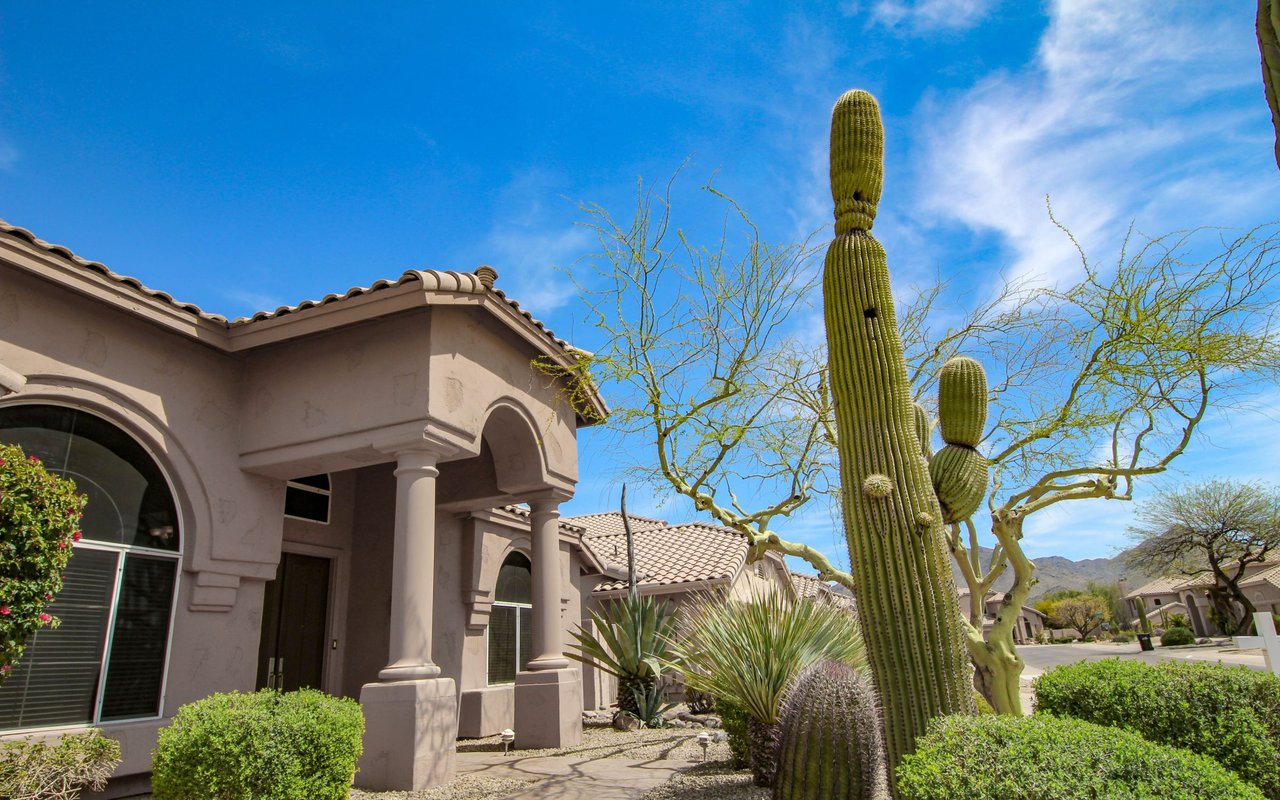
Buying a horse property in Cave Creek can feel exciting right up until the questions start piling up. Can you actually keep horses there? Does the zoning allow a barn, corral, or arena? Will the lot layout, trail access, flood risk, or permit requirements change what you can do after closing? If you want a property that truly fits your riding lifestyle, a careful review up front can save you time, money, and stress. Let’s dive in.
Why Cave Creek appeals to horse buyers
Cave Creek is well known for its equestrian setting, but the appeal goes beyond larger lots and desert views. The Town of Cave Creek maintains a network of multi-use trails that connects neighborhoods to the Town Core, Cave Creek Regional Park, Spur Cross Ranch Conservation Area, the Tonto National Forest, and Desert Foothills Land Trust properties. According to the town’s horseback riding information, these trails support horseback riding, and horses have the right-of-way.
That said, trail access is never something you want to assume. The town’s trails page notes that permitted use can vary by trail, motorized vehicles are prohibited on trails and in washes, and some nearby land may require separate permits. State trust land borders many parks and open spaces, and recreational use of that land requires a permit.
If easy riding access is part of your goal, Cave Creek Regional Park and Spur Cross Ranch Conservation Area are key points of reference. The town says Cave Creek Regional Park offers more than 11 miles of trails and a horse staging area, while Spur Cross Ranch Conservation Area offers more than seven miles of horseback riding trails.
Start with jurisdiction first
One of the most important early steps is confirming who governs the property. A Cave Creek mailing address does not automatically mean the parcel is within Cave Creek town limits. The town’s FAQ page explains that properties in ZIP code 85331 may also be located in Carefree, Phoenix, Scottsdale, or unincorporated Maricopa County.
That matters because zoning and property-use rules can change depending on jurisdiction. A parcel inside Cave Creek may be subject to town zoning standards, while a property outside town limits may fall under Maricopa County rules instead. Before you get attached to a property, confirm whether the governing authority is the Town of Cave Creek or Maricopa County.
Understand Cave Creek horse zoning
DR zoning is the key category
Under the current Cave Creek residential ordinance, effective December 4, 2025, residential land is divided into DR, R, and MR zones. The ordinance states that the DR zone is intended to reduce desert and urban land-use conflicts and help protect scenic vistas, natural habitats, hillsides, and washes.
For horse buyers, the big takeaway is simple: barns, corrals, horse shades, and other private ranch uses that are incidental to a residence are restricted to DR zones. That makes the zoning designation one of the first details you should verify on any horse property search.
Private ranch use has a 2-acre threshold
The ordinance says private ranch uses require at least 2 contiguous acres under single ownership in DR zones. These uses include boarding, breeding, equine training, equine lessons, the sale of ranch animals, and 4-H or youth activities.
Just as important, the ordinance also lists what private ranch use does not include. It excludes dairies, liveries, livestock sale barns, retail hay, feed, or tack sales, public ranch activities with an entry fee or donation, and animal shelters.
Lot size and horse use are not the same test
This is where many buyers get tripped up. DR minimum lot sizes vary by district, with DR-43 at 43,000 square feet, DR-70 at 70,000 square feet, DR-89 at 89,000 square feet, and DR-190 at 190,000 square feet. But those district minimums are separate from the 2-acre requirement for private ranch uses.
In plain terms, a parcel can meet the base lot size for a DR district and still not qualify for private ranch uses if it does not meet the 2 contiguous acre threshold. If horse use is central to your plans, make sure both standards are reviewed carefully.
Review the lot layout closely
Even when zoning looks promising, the physical layout of the parcel can limit what fits. Cave Creek’s FAQ explains that a site or plot plan should identify the lot’s size and shape, improvements, distances to property lines and structures, street and address information, legal description, utility locations, easements, and topography. For horse buyers, those details shape where a barn, paddocks, arena, trailer access, and turnouts may realistically go.
The town also notes that total land disturbance includes not only lot coverage, but also disturbance tied to accessory uses, driveways, and septic systems. That means barn pads, paddocks, arenas, drive aisles, and septic fields can all affect the usable layout of the property.
Verify boundaries and easements
Do not rely on listing photos, fences, or assumptions about where the lot begins and ends. The town says property boundaries must be verified through recorded surveys or subdivision plats, or by an Arizona registered land surveyor. It also says the town does not provide private property boundary information.
Access easements matter too, especially for horse trailers, shared drives, or routes that appear to connect to trails or open space. According to the town’s FAQ, private access-easement records are kept by the Maricopa County Recorder, not by the town.
Fence and corral setbacks matter
If you plan to add or modify horse facilities, setbacks can affect your design. Cave Creek requires zoning clearance before building a fence, wall, or gate, and in DR zones, fences including corral fences must be set back at least 12 feet from property lines.
That setback can reduce usable space more than buyers expect, especially on irregular lots. A property may look large on paper, but setbacks, topography, and easements can shrink the area available for horse improvements.
Check flood and wash conditions
In desert properties, flood risk is a practical issue, not a small detail. Cave Creek’s flood-risk guide advises buyers to review FEMA Flood Insurance Rate Maps, check seller disclosures for drainage or flooding problems, and avoid diverting natural washes without approval.
The guide also recommends avoiding crossing washes with walls or fences and leaving wash areas open when possible. It states that runoff should enter and leave a property in substantially the same manner as before development.
For horse property buyers, this can affect turnout areas, fencing plans, trailer circulation, and arena placement. A scenic wash or drainage path may also limit where future improvements can go.
Confirm utilities and permits
Horse properties often raise extra questions about water, wastewater, and outdoor improvements. If a parcel uses a well or septic system, the town’s FAQ directs buyers to the applicable permit agencies. Septic permits are handled through the Maricopa County Department of Environmental Services, and well permits are handled through the Arizona Department of Water Resources.
You should also remember that zoning clearance may be needed before certain site features are built. That includes fences, walls, and gates, and depending on the size or type of improvement, a building permit may also be required.
Lighting rules can affect arena use
If evening riding matters to you, review lighting rules before you buy. Cave Creek regulates horse-related lighting in residential areas. The ordinance says outdoor arenas, stables, and corrals cannot be illuminated after 10:30 p.m., and lighting standards for corrals, stables, arenas, exercise areas, paddocks, and barns are capped at 20 feet.
That may not be an issue for every buyer, but it is worth understanding if you plan to ride late or invest in training facilities.
Know the county rules if outside town
If the property is outside Cave Creek town limits, Maricopa County rules may apply instead of town standards. The county states that limited equestrian uses may be accessory to a single-family residence in Rural districts, while rodeo or event facilities and public riding or boarding stables may require special-use approval.
The county also says that for unattended horses in Residential districts, corrals must be set back 40 feet from property lines and provide at least 1,200 square feet per horse area. Those numbers are very different from Cave Creek’s DR fence setback rules, which is another reason jurisdiction should be confirmed early.
Your due diligence checklist before closing
Before you move forward on a Cave Creek horse property, make sure your review goes beyond the home itself. The goal is to confirm that the parcel supports your intended use now and in the future.
Here is a practical checklist based on the town and county guidance:
- Confirm whether the property is in Cave Creek town limits or unincorporated Maricopa County
- Verify the zoning designation and whether horse use is allowed as currently configured
- Confirm whether the horse use is conforming or legally nonconforming
- Review recorded surveys or plats to verify property boundaries
- Check easements through the Maricopa County Recorder
- Review FEMA flood maps and seller disclosures for drainage or flood concerns
- Check setback requirements for fences, corrals, barns, and related improvements
- Review utility and permit needs for septic, wells, and future site work
- Confirm trail access and permitted trail use rather than assuming nearby access
- Review CC&Rs and deed restrictions separately from zoning
Do not skip legal nonconforming review
The town says a legal nonconforming use is one that was lawfully established before the current zoning ordinance took effect. If the town has no substantiating record, the owner may need notarized third-party documentation.
This is especially important if a property has existing horse facilities or a use pattern that does not clearly match current code. You want written clarity before closing, not a surprise after you take ownership.
CC&Rs can be more restrictive
Zoning is only one layer of review. The town’s FAQ states that it does not enforce CC&Rs or deed restrictions, and those private restrictions can be more limiting than zoning.
That means a property can appear to work under public rules but still face private restrictions that affect horse use, structures, or improvements. Always review both.
Work with a buyer team that knows the process
Buying a horse property in Cave Creek is not the same as buying a standard suburban home. You need to evaluate zoning, acreage, lot layout, setbacks, access, drainage, and permit pathways as part of the buying process, not as an afterthought.
That is where a local, process-driven team can make a real difference. At Those Callaways Real Estate, our Clients First approach is built around clear guidance, responsive communication, and helping you make informed decisions with confidence. If you are planning to buy in Cave Creek, we would be glad to help you evaluate properties, ask the right questions, and move forward with a plan that fits your goals.
FAQs
What zoning should you look for when buying a horse property in Cave Creek?
- In Cave Creek, barns, corrals, horse shades, and other private ranch uses incidental to a residence are restricted to DR zones, so confirming the zoning designation is a key first step.
How many acres do you need for private ranch use in Cave Creek?
- The current Cave Creek residential ordinance says private ranch uses in DR zones require at least 2 contiguous acres under single ownership.
Does a Cave Creek mailing address mean the property is inside town limits?
- No. The town says a 85331 mailing address may also be in Carefree, Phoenix, Scottsdale, or unincorporated Maricopa County.
What should you check about trails when buying a Cave Creek horse property?
- You should confirm whether the nearby trails allow horseback riding, whether state trust land permits are needed, and whether any recorded easements or access issues affect the property.
Do CC&Rs matter when buying a Cave Creek horse property?
- Yes. The town says it does not enforce CC&Rs or deed restrictions, and those private restrictions can be more restrictive than zoning.
What flood concerns should you review on a Cave Creek horse property?
- You should review FEMA flood maps, seller disclosures about drainage or flooding, and any washes or drainage patterns that could affect fencing, arenas, access, or future improvements.