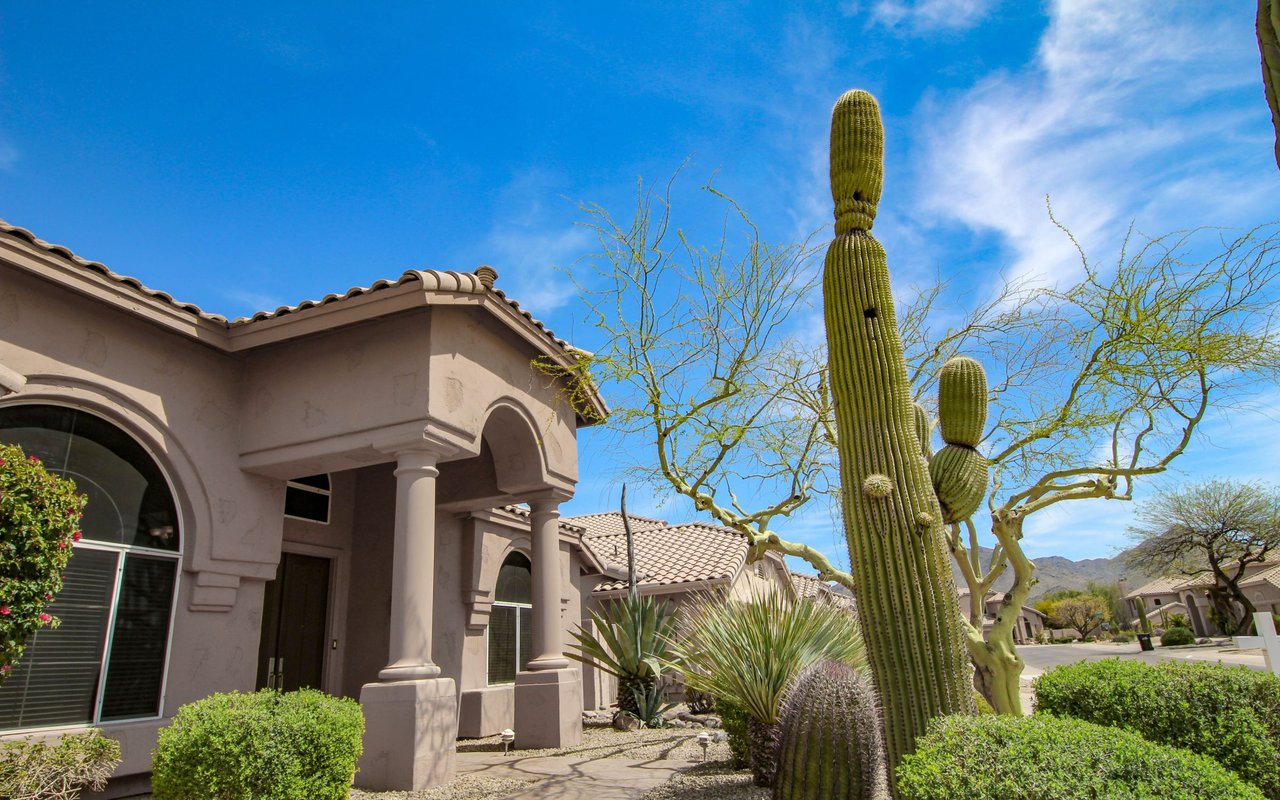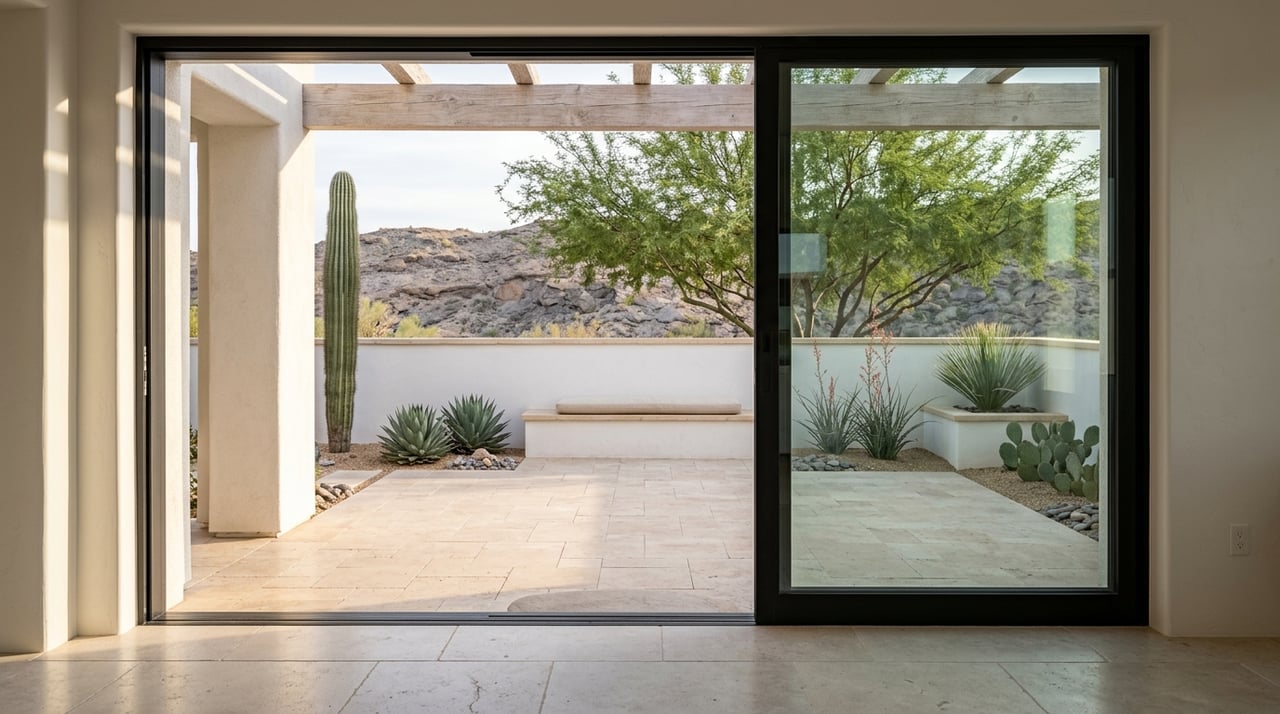
If you picture sipping coffee while the sun lights up Black Mountain, you are not alone. Many buyers come to Carefree for mountain silhouettes, open desert panoramas, and twinkling city-light views. The right home can deliver all of that, but only if you know how to judge the view, protect it, and live comfortably with it year-round. In this guide, you will learn what Carefree views look like, how they influence value, the site and home features that matter, and the due-diligence steps that keep your view secure. Let’s dive in.
Why Carefree view homes stand out
Carefree sits in the Sonoran Desert just north of Scottsdale with boulders, saguaro, and foothills shaping every horizon. The area’s signature landmark is Black Mountain, which rises to about 3,400 feet and provides the dramatic ridgeline so many listings highlight. You can read more about the town’s setting and character on the Carefree page and the Black Mountain entry on Wikipedia.
- Learn about the town’s geography in the Carefree overview on Wikipedia.
- See context for the mountain itself in the Black Mountain entry.
What views you can expect
Mountain and ridgeline views
Most buyers chase a clean profile of Black Mountain or distant McDowell and Continental ridgelines. These silhouettes tend to be the most durable part of a view because they sit in the far background.
Desert panoramas and washes
Broad desert scenes showcase boulder fields, saguaro, and natural washes. These spaces add a sense of depth and privacy. In some neighborhoods, natural open space is common, but always verify whether it is truly protected.
City-light and amenity views
Homes on higher ground can catch valley lights at night. Some properties also orient toward private amenities like golf fairways. In gated and custom enclaves, expect architectural review boards and CC&Rs that guide exterior changes and landscape choices. Those rules can help preserve neighborhood character, but you should confirm what they allow before you rely on them.
How a view influences value
Academic studies show that view premiums vary by type and quality. Water views often command the highest premiums, while mountain and scenic land views are smaller, but still measurable. In general, research indicates single-digit to low-double-digit percentage premiums for mountain and scenic views depending on quality and market conditions. For the underlying analysis, see the hedonic pricing work summarized in Benson et al., Pricing Residential Amenities: The Value of a View.
What matters most in Carefree is local evidence. The best approach is to compare recent sales in the same neighborhood that are similar in size and condition, then isolate the view difference. Agents and appraisers often use paired-sales analysis to show how the market treats each view type, lot elevation, and orientation.
Orientation and sun: comfort and costs
Test the home at key times
Carefree’s desert climate makes sun exposure a big deal. West and southwest exposures deliver dramatic sunsets and city-light panoramas, but they also bring the strongest late-day heat in summer. South-facing rooms can be pleasant in winter, yet need shading in hotter months. Visit a view home at sunrise, mid-day, and late afternoon to see glare, heat buildup, and how usable the outdoor spaces feel when it is hot.
Glazing, shading, and efficiency
The right window package helps you enjoy the view without overheating the house. Look for double-pane low-e windows with a low solar heat gain coefficient suited to hot climates. Deep overhangs, exterior shades, or quality interior attachments can further cut heat gain while keeping the view. The Department of Energy’s Building America guidance explains how glazing, overhangs, and attachments work together. See the practical window and shading tips in this PNNL resource.
Outdoor living that works all year
Covered patios, pergolas, and well-placed shade structures can turn a deck with a big view into a true living room. Pool orientation and nearby trees affect how often you will actually use the space. In Arizona, water-wise landscaping keeps maintenance down and supports local conservation goals. For plant lists, design ideas, and rebates that may apply, review the Arizona Department of Water Resources xeriscape guidance.
Grade the view’s quality and permanence
A simple way to judge any view is to break it into layers:
- Foreground, 0 to about 200 feet. Think trees, walls, or rooflines on or next to your lot. These features frame or block the view and can change quickly.
- Midground, 200 to about 1,000 feet. Nearby homes or vacant parcels live here. This is where most new construction could affect your view.
- Background, beyond about 1,000 feet. Ridgelines and mountain silhouettes usually stay the same, which makes them more durable.
A broad, background-dominant view ages best. Photograph sightlines from key rooms and sketch what sits in each layer, with special attention to any vacant lots in the midground. Research supports that the quality and scope of scenery, not just the existence of a “view,” drive what buyers are willing to pay. See the discussion in Benson et al..
Hazards and insurance to consider
Carefree’s natural beauty comes with natural risk. Hillside and desert areas can face elevated wildfire exposure, which can influence insurance availability and premiums. Wash-adjacent lots may also have flash-flood considerations. As part of due diligence, review county flood resources and confirm your insurer’s stance on wildfire and flood coverage. Factor any mitigation needs, like defensible-space work or drainage improvements, into your overall budget.
Do your due diligence
Here is a practical sequence to follow as you evaluate a view home:
- Gather the seller package. Request HOA and CC&R documents, architectural guidelines, meeting minutes, current assessments, and any recorded view or scenic easements. If the seller cannot provide them, pull the official records through the county public-record portals. Start with the Maricopa County public-records guide.
- Search recorded documents and assessor data. Confirm easements, setbacks, and any restrictive covenants that could affect building height, landscaping, or sightlines. Use the same Maricopa County portals to access Recorder and Assessor information.
- Check local codes. Review Town of Carefree zoning and building rules, including height limits, hillside grading, and any scenic corridor regulations. Begin with the Carefree Code of Ordinances. Some subdivisions also require Architectural Review Committee approval.
- Study the comps. Ask your agent for recent sales that isolate view differences within the same neighborhood and elevation band. Insist on photos that show the actual viewlines for each comp.
- Order an appraisal focused on the view. Ask the appraiser to perform a paired-sales analysis or to clearly show view adjustments. For why view quality matters in valuation, see Benson et al..
- Inspect the site and structure. A standard home inspection should be paired with a site review for hillside grading, drainage, and potential wildfire defensible space. For window performance and shading, compare what you see to DOE/PNNL guidance.
- Get insurance quotes early. Pre-check homeowners and any needed wildfire or flood coverage so you understand total carrying costs before you finalize price and terms.
How to work with your agent
Choose an agent with recent experience in Carefree neighborhoods and hillside homes who can:
- Surface paired-sales evidence that shows how the market values specific view types and orientations.
- Explain CC&R submission and architectural review steps so you know what future changes are realistic.
- Coordinate the right experts, from appraisers to inspectors, and keep due diligence on schedule.
Consider asking your agent and legal counsel about contract protections, such as a seller disclosure addendum that describes known view easements or neighbor plans, and a contingency period long enough to verify recorded documents and complete an appraisal with explicit view adjustments. In rare cases, buyers negotiate recorded view or scenic easements with adjacent owners. These are legal instruments that require cooperation and counsel, and they are very fact-specific.
Quick buyer checklist
- Visit at sunrise, mid-day, and sunset to see glare, heat, and how outdoor spaces feel. For sun-control best practices, review PNNL’s window and shading guide.
- Photograph the view from main rooms and sketch sightlines, labeling any vacant parcels. The idea of grading view quality by scope and distance comes from research like Benson et al..
- Pull recorded CC&Rs, easements, and prior permits through Maricopa County’s public-records portals.
- Order an appraisal that isolates the view premium and documents adjustments.
- Get wildfire and flood insurance pre-quotes and plan for any mitigation work.
- Inspect windows for low-e, low SHGC ratings and evaluate shading strategies using DOE/PNNL guidance.
- Review long-term landscape water needs and xeriscape options with ADWR’s conservation resources.
Ready to find the right Carefree view home and protect what you love about it? Our team knows the neighborhoods, the hillsides, and the paperwork that comes with them. Connect with Those Callaways Real Estate to start a focused search tailored to your view goals.
FAQs
What types of views are common in Carefree, AZ?
- Mountain silhouettes from Black Mountain, broad Sonoran Desert panoramas with boulders and washes, and higher-elevation city-light views at night are the most common.
How much more do Carefree view homes usually cost?
- It depends on view type and quality. Studies show mountain and scenic views often add single-digit to low-double-digit percentage premiums, but local comps matter most.
How can I tell if a view is protected from future building?
- Confirm recorded view or scenic easements, check subdivision CC&Rs and architectural rules, and review town height limits before relying on long-term permanence.
What should I look for in windows when buying a view home?
- Seek double-pane low-e windows with a low SHGC for hot climates, and pair them with overhangs or operable shades to control heat while keeping the view.
Are wildfire or flood risks a concern near hillside or wash lots?
- They can be. Review county flood resources, assess site drainage and defensible space, and obtain insurance quotes early to understand coverage and costs.